Grolia
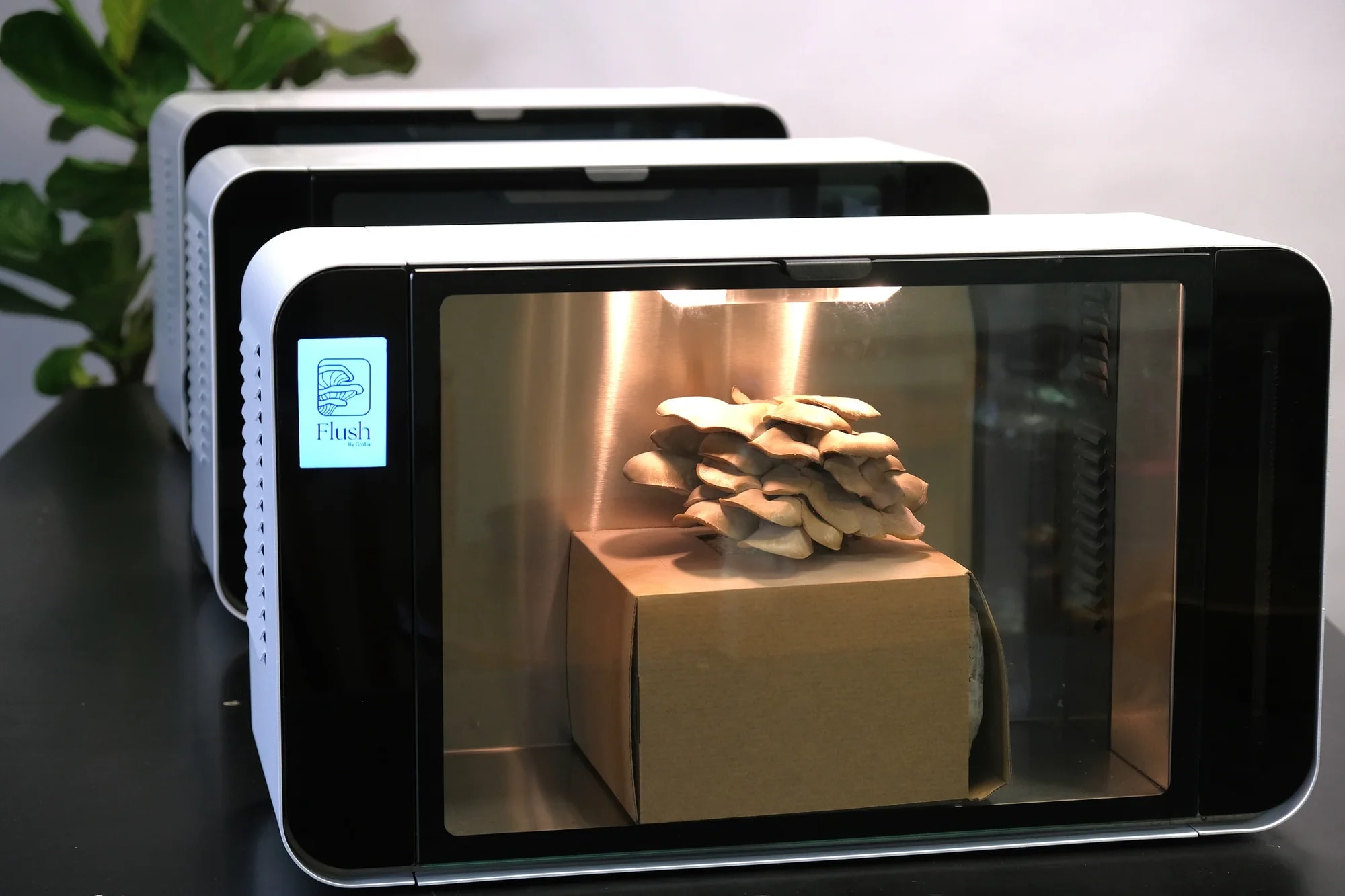
Firmware, the touchscreen interface and the grolia.com.au platform for Flush, a benchtop cabinet that grows gourmet mushrooms.
We write the software inside connected products and the software around them: firmware for the microcontroller, the touchscreen on the device, signed over-the-air updates, and the web platform where customers buy, pair and monitor it.
Case studies
Firmware, the touchscreen interface and the grolia.com.au platform for Flush, a benchtop cabinet that grows gourmet mushrooms.
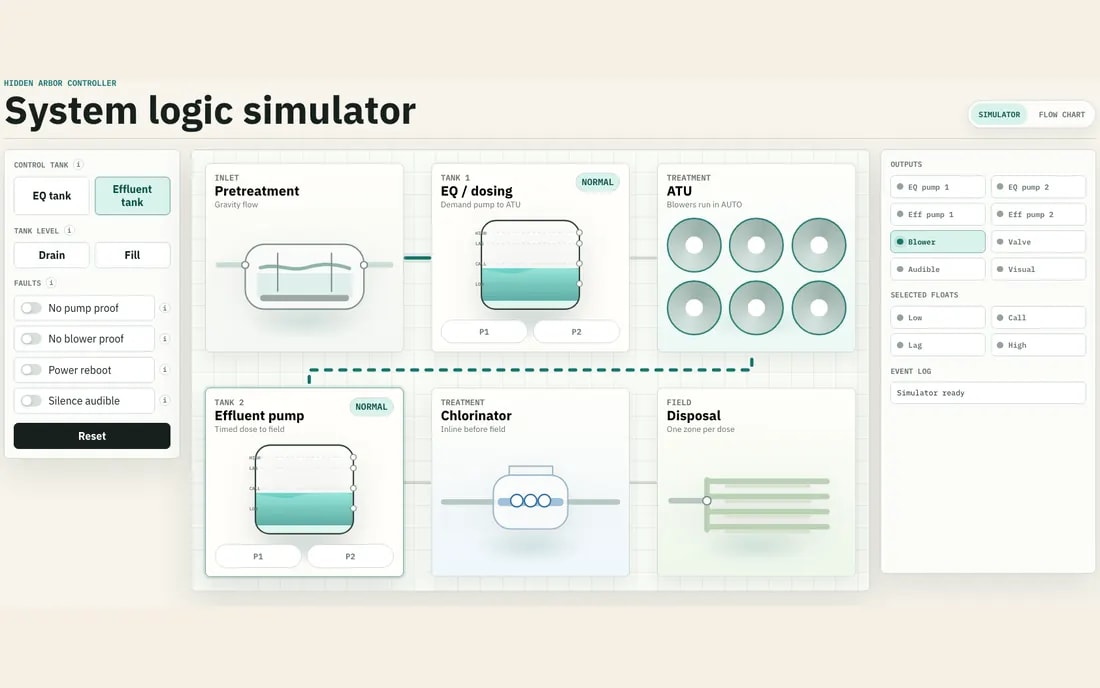
ESP32 firmware for an automated sewage treatment system, and a browser simulator that runs the real controller code.
What we build
Sensors, outputs and control loops in C++, with safe start-up and fault handling.
Touchscreen interfaces for small displays, with presets, settings and pairing.
Signed releases that install in the background and roll back if something fails.
Firmware logic compiled to WebAssembly so it can be tested in a browser before hardware exists.
Pairing, device sign-in and sensor readings stored and charted in the cloud.
A web dashboard where owners see their device, and staff see the fleet.
Approach
We keep control logic separate from hardware drivers, so it can be tested on a laptop and in a simulator long before it runs on the board.
Steve wrote the firmware that ships in Grolia’s Flush cabinets, on Raspberry Pi RP2350 boards, and we have written control firmware for ESP32 for Sterling Civil. Both are C++ with PlatformIO. We work alongside whoever designs your circuit board and enclosure.
Questions
Raspberry Pi RP2350 boards for Grolia’s Flush cabinet, and ESP32 for a wastewater controller. Both use C++ with the Arduino framework and PlatformIO.
We write the software. On Grolia, the cabinet and its electronics were designed by Grolia’s own engineers, and Steve worked alongside them.
Yes. For the wastewater controller we compiled the control code to WebAssembly so the client could run it in a browser simulator before any panel was wired.
Working together
No sales calls to book. Tell us about the project and we’ll take it from there.
Tell us what you need built, what you use now and roughly when. A few sentences is enough to start.
Every enquiry is read by Steve, the founder. If it looks like a good fit, he replies by email with questions.
If the project suits us both, we talk through what to build first and how to get there.
A few sentences is enough. Steve reads every enquiry and replies by email.